
Collection: Crutches
Crutches designed to provide stable support during temporary or long-term mobility difficulties. Choose between adjustable forearm crutches and underarm models according to the level of support required.

-
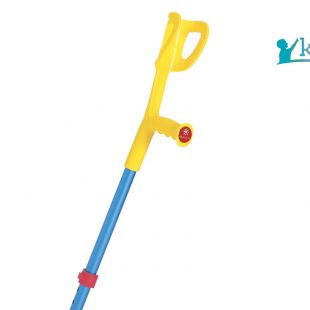
Children’s Forearm Crutches Moretti Mopedia Brio RP700C – Adjustable, up to 80 kg, Pair
Regular price 24,00 €Regular price -
Adjustable axillary crutches Mobiak
Regular price 16,00 €Regular price -
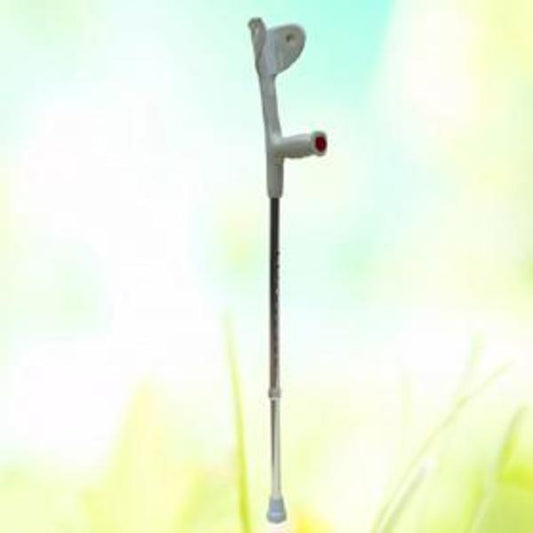
Ergodynamic Canadian crutch
Regular price 37,00 €Regular price -
Poly Canadian Crutch
Regular price 21,00 €Regular price



How to choose crutches
Forearm or underarm crutches
Forearm crutches provide support through the handle and forearm cuff, while underarm models distribute support differently.
Height and adjustment
Check the available height range and adjust both crutches equally. Incorrect adjustment can affect posture and stability.
Permitted weight bearing
Weight bearing through the affected leg must follow clinical instructions. Also check the maximum user weight of the crutches.
Handle, cuff and tip
The handle and cuff should be comfortable and stable, while the rubber tip must be intact and provide good grip.
Compare the main crutch types
Forearm crutches
Suitable for temporary or longer-term use depending on the condition. They require sufficient upper-body strength and control.
Underarm crutches
Provide a different support arrangement. The top should not press directly into the armpit, and weight is mainly carried through the handgrips.
Adjustable children’s crutches
Designed for a shorter user height and specified weight capacity. Adjustment should be reviewed as the child grows.
Walking technique and permitted weight bearing through the affected leg should be confirmed by a clinician or rehabilitation professional. Do not use crutches with worn tips, loose mechanisms or incorrect height.
Not sure which crutches are suitable?
Tell us the person’s height and weight, whether the crutches are for an adult or child, the permitted weight bearing and the expected period of use.
Need quick assistance? Call 0888 987 922
- Free consultation
- Reply within one business day
- Assistance with NHIF information
Crutches through the Bulgarian NHIF
Crutches may be supplied when the relevant medical indications, prescription and documents are present. The type, size and specific model must correspond to the individual needs and current NHIF specification.
Frequently asked questions
What is the difference between forearm and underarm crutches?
Forearm crutches use a handgrip and cuff around the forearm. Underarm models have an upper support, but body weight should not be carried directly through the armpits.
How is the correct height adjusted?
Both crutches are adjusted equally for the user’s height, posture and model type. The handgrips should allow control without excessive shoulder elevation.
Can the affected leg bear weight?
Only according to the specific clinical instructions. Full, partial or non-weight-bearing status requires different walking techniques.
Are crutches suitable for prolonged use?
This depends on the model, condition, upper-body strength and correct technique. Wrist, elbow, shoulder or underarm pain requires reassessment.
When should the rubber tips be replaced?
Replace them when worn, cracked, hardened or offering reduced grip. Both tips should remain in good and similar condition.
Can crutches be obtained through the Bulgarian NHIF?
This may be possible with the relevant medical indications and documentation. The selected model must correspond to the prescribed aid and current NHIF specification.