
Collection: Anti-decubitus mattresses
Anti-decubitus mattresses reduce the risk of bedsores and provide better comfort during prolonged bed rest. At Angelo, you will find static and compressor models, suitable for home and hospital use, which improve pressure distribution and support blood circulation.

-
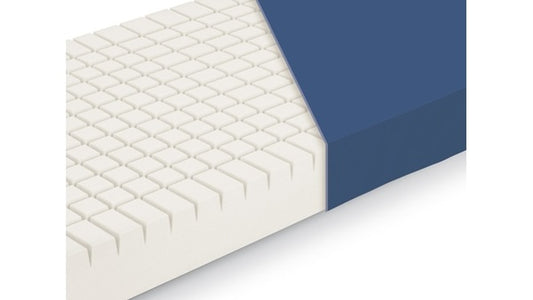
Anti-decubitus orthopedic mattress – passive
Regular price 156,00 €Regular price -
Anti-decubitus mattress Airlux 1000 with protective cover
Regular price 180,00 €Regular price -
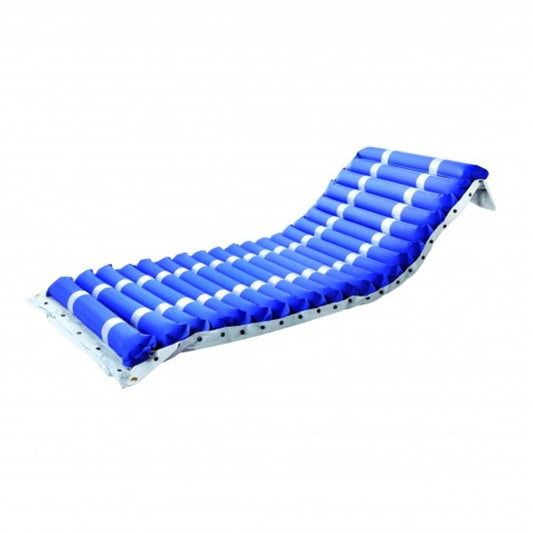
Anti-decubitus mattress with pump and air cells
Regular price 112,48 €Regular price



How to choose a pressure-relieving mattress
Mobility and risk
Consider how long the person remains in bed, whether they can reposition independently and whether redness or an existing wound is present.
Foam or alternating pressure
A passive mattress redistributes pressure through profiled foam, while a powered system periodically changes pressure in its air cells.
Weight and specifications
Check the maximum user weight and follow the settings specified by the manufacturer for the chosen model.
Size and placement
Compare the mattress dimensions with the bed and confirm whether the product is used on its own or over a base mattress.
Compare the available options
Passive orthopaedic mattress
Profiled polyurethane foam without a pump. It provides stable support and redistributes pressure during prolonged bed rest.
Air-cell mattress with pump
Alternates pressure between air cells to change support points. It requires power and operation according to the manufacturer’s instructions.
Airlux 1000 with protective cover
An alternating-pressure pump system supplied with a waterproof cover and the components needed for day-to-day care.
A pressure-relieving mattress is one part of an overall care plan. It does not replace skin checks, repositioning or clinical assessment. Seek medical advice if redness, broken skin or a wound is present.
Not sure which mattress is suitable?
Tell us about the person’s mobility, any redness or wounds, approximate weight and bed size. We will help you compare suitable models.
Need quick assistance? Call 0888 987 922
- Free consultation
- Reply within one business day
- Assistance with NHIF information
Pressure-relieving mattresses through the NHIF
A pressure-relieving mattress may be supplied when the medical indications and documentation requirements are met. A medical protocol from a specialist medical committee or an expert decision issued by TELK/NELK is generally required. The specific product depends on the prescription, individual needs and the current NHIF specification.
Frequently asked questions
What is the difference between a foam and an alternating-pressure mattress?
A passive mattress redistributes pressure through profiled foam and does not require electricity. A powered system periodically changes pressure in its air cells to alternate support points.
Is the mattress placed over a regular mattress?
This depends on the design of the specific model. Some powered overlays are placed over a base mattress, while other products may replace it. Follow the product information and manufacturer’s instructions.
Should the pump run continuously?
Alternating-pressure systems generally need continuous operation to maintain the set pressure. Follow the instructions for the specific model and do not switch off the pump without checking them.
Is it suitable when a pressure ulcer is already present?
When a wound already exists, the choice should be based on its condition and a clinical assessment. The mattress supports pressure redistribution but does not replace wound care or prescribed treatment.
Is a pressure-relieving mattress sufficient on its own?
No. Regular skin checks, appropriate hygiene, moisture management, nutrition and repositioning according to the individual care plan remain important.
Can a pressure-relieving mattress be obtained through the Bulgarian NHIF?
Yes, when the medical indications and current requirements are met. A protocol from a specialist medical committee or a TELK/NELK decision is required, and the specific product depends on the prescription and current NHIF specification.